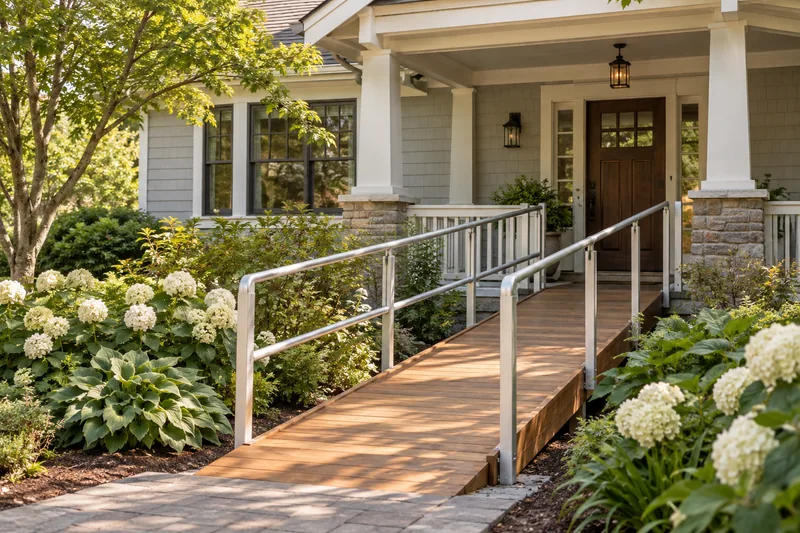
Describe the result you want.
Start with an everyday goal: reaching another floor, using a bathroom differently, or making an entrance easier to navigate. Describe what is difficult today and what you hope would feel different after the project.
Gather a small, useful set of materials.
You do not need a finished design to begin. A few clear notes can make the discussion more productive.
- Photos of the space and the route to it.
- A short list of priorities and questions.
- Any timing constraints or upcoming changes in the household.
- Details of equipment that needs to be considered.
Talk about budget and scope together.
Explain any budget boundaries you want the team to work within. Ask how different scope choices would be priced and what still needs to be assessed before an estimate can be prepared. Avoid relying on a generic online price for your specific home.
Make your consultation notes easy to use.
Bring one page of priorities instead of a large collection of unrelated inspiration photos. A useful brief identifies the room or entrance, the everyday task you want to improve, the features you hope to keep and the questions you cannot answer alone. Group inspiration images by the feature you like rather than treating a whole photographed room as the specification.
- Separate must-have functions from preferred finishes.
- Note who will make selections and approve the written scope.
- Finish the meeting by recording the next action and who owns it.
Leave with a clear next step.
Before the conversation ends, confirm who will follow up, what information is still needed, and whether a site visit is the next step. Ask how the proposed scope and any later changes will be documented.
Turn your questions into a plan.
Tell us about your home and the changes you have in mind.
Start a conversation ↗