The Thrive journal
Begin with your home. Plan for your life.
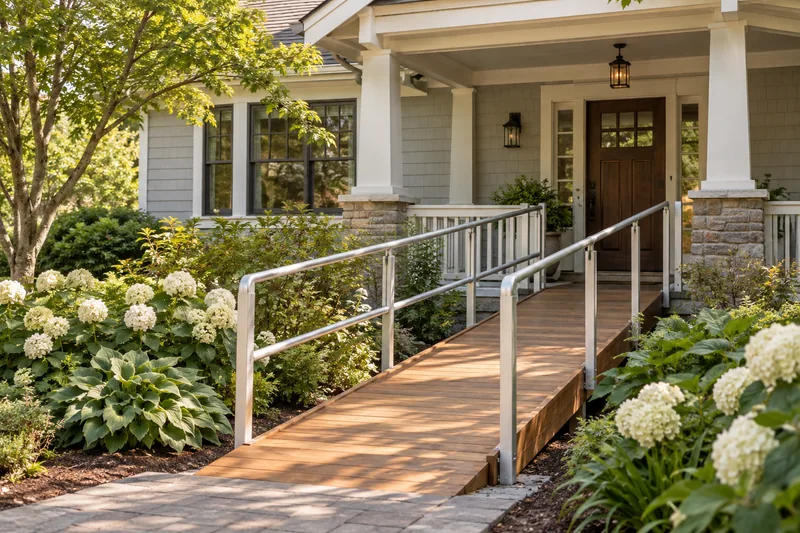
A useful ramp plan starts with the person, the entrance, and the whole route between them. These questions can help you prepare before choosing equipment.
Start with everyday use.
Think about the mobility equipment used, how often the entrance is needed, and whether the need is temporary or ongoing. Consider what is difficult about the current route.
Look beyond the step.
Review the approach, landing, doorway, and any obstacles together. Available space matters as much as the change in level.
- How does the route connect to the places you go?
- Is there room to approach and use the doorway?
- Which material and traction questions need attention?
Compare options in context.
Threshold, modular, portable, and permanent ramps serve different situations. Have the proposed equipment and layout checked for your location instead of choosing by appearance alone.
Include care in the plan.
Ask about installation, overall cost, and maintenance. Keep the manufacturer’s care guidance and the needs of the setting in the conversation.
Bring a route checklist to your assessment.
Follow the intended journey from arrival to the room beyond the entrance. Note where people wait, turn, open doors and move between surfaces. Include questions about the route in different weather and about upkeep throughout the year.
Ask the assessor to explain the proposed layout and how the surrounding site affects it. Dimensions, materials and installation requirements need to be established for the actual project; a general guide cannot confirm compliance or suitability.


Let’s look at your entrance together.
Start with the route you use and the change you want to make.