
The Thrive journal
Thoughtful entrances open possibilities.
An entrance is part of taking part: visiting, working, and moving through a familiar community. Consider access as part of the whole space, from arrival to the destination.
Think about the complete journey.
A ramp is one part of a route. Consider how people reach it, use the landing and doorway, and continue into the space. A barrier at either end can still make the journey difficult.
Plan a welcoming entrance.
Access and appearance can be considered together. The ramp’s layout and materials should make sense alongside the surrounding architecture and the way the space is used.
Ask who will use the route.
Discuss the people, mobility equipment, available space, and setting before choosing a design. A home entrance and a public entrance can raise different requirements.
Check the plan for the place.
Ask a qualified professional to review the proposed route and applicable requirements for the location. Include operation and ongoing care in the discussion so the entrance remains part of everyday planning.
Bring a route checklist to your assessment.
Follow the intended journey from arrival to the room beyond the entrance. Note where people wait, turn, open doors and move between surfaces. Include questions about the route in different weather and about upkeep throughout the year.
Ask the assessor to explain the proposed layout and how the surrounding site affects it. Dimensions, materials and installation requirements need to be established for the actual project; a general guide cannot confirm compliance or suitability.

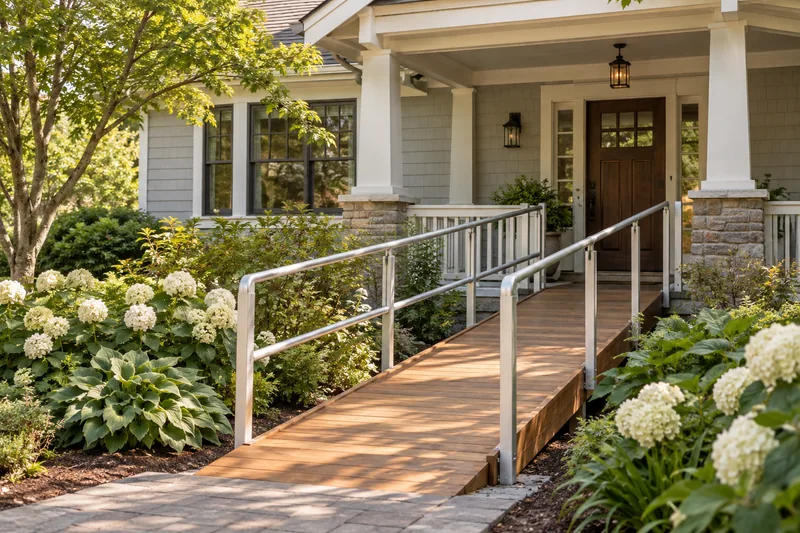
Consider the whole way in.
Talk through the entrance, its setting, and the people who use it.